You Can Download This Unique Blog Post Text File From Description Below And Use It On Your Site.
Educators may need to reassess their approach to plagiarism detection, focusing on evaluating the quality of original thought and creativity in student submissions rather than merely flagging similarities. Promoting transparency and educating students about ethical AI use are essential steps in navigating the shifting landscape of AI-enhanced writing.
Key takeaways:
- Chart Turnitin’s detection accuracy.
- In conclusion, Turnitin’s capability to detect plagiarism in AI-enhanced content refined with the help of ChatGPT and Quill Bot Premium appears to be limited, while it can identify common phrases and terminology, its effectiveness in detecting subtle transformations and improved content quality is questionable.
As the landscape of academic writing evolves, educators and students must adapt their approach to plagiarism detection while adhering to the principles of integrity and responsible AI use.
Plagiarism, the act of using someone else’s work without proper attribution, is a serious offense in the world of academia, journalism, and content creation. Fortunately, with the advent of advanced AI tools like ChatGPT, you can now detect and remove plagiarism like a pro.
In this comprehensive guide, we will explore the world of ChatGPT plagiarism detection and provide you with the expertise you need to ensure your content remains original and ethically sound.
Plagiarism encompasses various forms of content theft, including copying text, ideas, or concepts without proper attribution. It erodes trust, hinders creativity, and can lead to severe consequences. Plagiarism can manifest in several ways, such as direct copying, paraphrasing without citation, or even self-plagiarism where an author recycles their own work without acknowledgment.
ChatGPT is a versatile AI language model developed by OpenAI. It possesses remarkable abilities in understanding and generating human-like text, making it a powerful tool for various applications, including plagiarism detection. Its strength lies in its ability to identify similarities between your text and a wide array of sources, making it a valuable assistant in your quest to detect plagiarism.
Utilizing ChatGPT for plagiarism detection is a straightforward process. You provide the text you want to analyze, and ChatGPT will compare it against a vast database of existing content. ChatGPT meticulously examines your text, identifying instances where it closely resembles other content, providing you with insights into potential plagiarism.
Once ChatGPT flags potential instances of plagiarism, it’s time to pinpoint the sections in your text that require attention. Chat’s analysis will guide you to these specific areas. With the identified sections in hand, you can proceed to rewrite the content in your unique voice and style, properly attributing sources where necessary, ensuring you adhere to ethical writing practices.
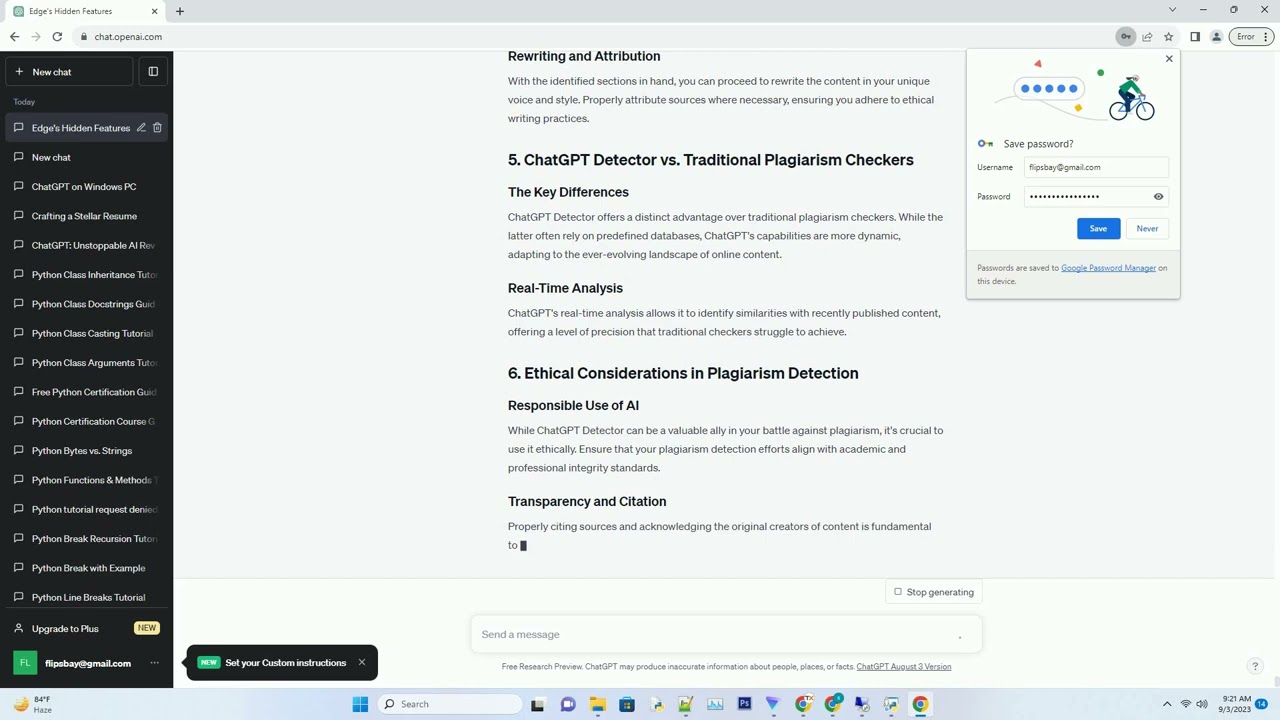
ChatGPT Detector offers a distinct advantage over traditional plagiarism checkers. While the latter often rely on predefined databases, Chat’s capabilities are more dynamic, adapting to the ever-evolving landscape of online content. Chat’s real-time analysis allows it to identify similarities with recently published content, offering a level of precision that traditional checkers struggle to achieve.
While ChatGPT Detector can be a valuable ally in your battle against plagiarism, it’s crucial to use it ethically. Ensure that your plagiarism detection efforts align with academic and professional integrity standards. Properly citing sources and acknowledging the original creators of content is fundamental to maintaining ethical writing practices.
ChatGPT can help you identify areas where citations are necessary. Here are some top tips for effective plagiarism detection and removal:
- Use ChatGPT regularly.
- Incorporate ChatGPT Detector into your writing process to ensure ongoing plagiarism checks.
- Understand fair use.
- Familiarize yourself with fair use policies and guidelines to distinguish between acceptable and unacceptable use of content.


