Since its release on November 30th last year, Chachi PT has been causing quite a stir in the headlines. It seems like no matter where you look, ChatGPT is the topic of conversation. It has essentially become a definitive point of reference for anything related to artificial intelligence, and its popularity just continues to soar remarkably. This program, developed by OpenAI, is achieving some extraordinary records. Can you believe it just amassed an astonishing 100 million users in just three months? To put things into perspective, TikTok took nine months to reach that milestone, while Instagram required more than two and a half years.
What’s even more intriguing is that some individuals are beginning to contemplate whether Chachi PT might eventually surpass Google in the search industry. I mean, Google has held the throne of internet searches for over two decades, yet this AI language model is causing people to question the established order. Interestingly, Chachi PT’s impact compelled Google to unveil its own language model referred to as Bard. However, when users put Bard to the test, it fell short of matching its primary competition. Sure, Bard had unique features that ChatGPT liked, but it failed to achieve the status of a household name among AI language models.
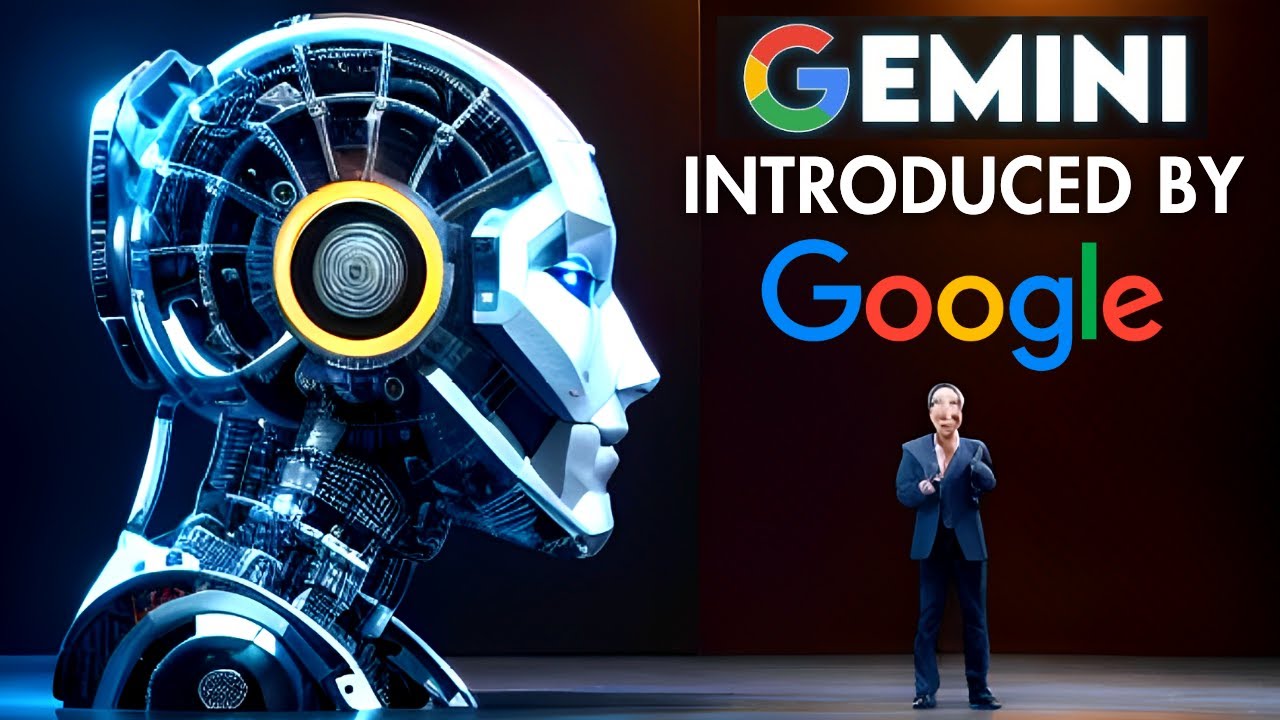
Now, Google is changing gears and bringing its top-notch AI teams together for a new project called Gemini. It’s like a secret mission to combine their AI expertise using a model that once defeated a world champion in a board game. They’re aiming to build upon their already advanced AI tools, all in the hopes of dethroning ChatGPT from its top spot. Exciting times, right?
In a grand unveiling at Google’s I/O developer conference in May, the tech giant pulled back the curtain on its latest AI masterpiece, Gemini. With the resounding declaration, Google proclaimed Gemini was created from the ground up to be a multimodal, highly efficient tool and API integrations, built to enable future innovations. This revelation not only sparked excitement but also raised intriguing questions about the true essence of this new AI contender.
Unlike a mere software launch, Gemini is set to arrive in various forms, each tailored to its unique role and purpose. Google’s innovation has crafted an adaptable AI capable of fine-tuning its abilities to specific needs. The new creation draws inspiration from AlphaGo, the groundbreaking AI system that made history by defeating a professional human Go player. By incorporating AlphaGo’s pioneering training techniques, Gemini gains the ability not only to analyze but also strategize. The potential to plan and solve complex problems could elevate Gemini to unprecedented heights.
It’s not just about financial gains for Google. With a discerning eye, they’re scrutinizing the fundamental essence of AI. Gemini is poised to embody not only technological prowess but also the embodiment of a learning, adaptable, and creative entity. As the AI landscape evolves, the spotlight is firmly fixed on Gemini’s journey, a journey that possibly holds the key to unlocking new dimensions of artificial intelligence.
Gemini is pretty awesome because Google has a ton of really useful information. They’ve got videos from YouTube, books from Google, and a bunch of stuff from searching, even smart things from Google Scholar. The secret stash of information is like a superpower that helps Gemini be more super smart. It gives Gemini an advantage in making better AI models compared to others. With this special information, Gemini is set to be a strong contender.
Now, Gemini isn’t just ordinary. It’s the first AI that can understand videos, text, and pictures altogether. Other AIs like ChatGPT just can’t do that. For example, imagine Gemini creating image captions. It looks at the visual stuff in the picture and then the written information from the web to come up with the captions. When faced with questions, it can use text from the internet and audio from podcasts or videos to give answers. And if it’s writing a poem, Gemini brings in words from the web and feelings from music or art to make it special. Plus, it pays attention to feedback to get better. Mistakes Gemini learns from them and avoids making the same ones again. When it does something right, it remembers that and builds on it.
This model is pretty amazing. It can even make up its own goals based on curiosity, coming up with questions or challenges to learn more and grow its skills. With reinforcement learning, Gemini gets even smarter and more flexible in dealing with text. It also becomes more imaginative and better at understanding and creating text.
Google’s clever thinking is making Gemini stand out in the AI world. They’re making it easy for AI to understand all sorts of things. This actually means that Gemini has the potential to bring about a revolution in AI, especially in the field of generative AI, which is projected to be valued at over 80 billion dollars by the year 2030. Generative AI is all about making new things like text, pictures, sounds, videos, and more.
Gemini could stand out as one of the most influential tools for generative AI. Just imagine being able to create top-notch text, comprehend any kind of content, chat with Gemini like you would a real person, collaborate to create new things, or simply have a blast exploring new ideas. Personally, I think Gemini has all the potential to shake up the world of AI and our own world as well. It opens up new chances and hurdles to overcome.
But the big question is, can it outshine ChatGPT, the current AI front runner? Let’s dig in and find out. ChatGPT, made by OpenAI, is quite an advanced AI language model. It’s been updated many times since its launch back in 2022. The latest version, ChatGPT4, has the ability to generate all sorts of content based on prompts and information from the internet.
ChatGPT4 has quite the skill set. It can answer questions, craft essays, and even compose songs, sounding just like a real person chatting. However, it’s not perfect. Sometimes it’s not accurate or clear about how it makes decisions. It doesn’t always come up with fresh content and can’t dive into deep conversations or learn from past experiences.
And then comes Gemini, aiming to set a higher bar. It’s been designed to be more dependable, clear, original, and engaging. Gemini learns from its past actions, explaining its decisions clearly, creating a wider variety of content, and can engage in more in-depth interactions. But let’s not forget about the strengths of ChatGPT. It can churn out various types of content, handle multiple tasks, and it’s free for everyone to use. Plus, it’s been put through its paces more extensively.
The point isn’t to replace ChatGPT with Gemini, but to provide an alternative option. So, both Gemini and ChatGPT are pretty awesome AI systems, each with its own pros and cons. They’re turning the world of AI and technology upside down, changing it for the better.
Behind Gemini is Google DeepMind, a team of really smart folks working on AI stuff. They started this in 2010, and it was kicked off by a person named Demis Hassabis. He’s super good at chess, knows a lot about brains, and makes games. His big dream is to create an AI that’s super smart, even smarter than people.
DeepMind did something amazing before. They made an AI called AlphaGo that beat a champion in a game called Go. People thought this game was way too tough for machines, but AlphaGo was super clever. It learned by playing lots of games and getting better each time.
Hassabis didn’t stop there, though. He wanted AI to talk and understand language like we do. That’s where Gemini comes into play. It’s like they mixed AlphaGo’s smarts with talking skills. Hassabis talked about this in an interview and said it would be really cool, but didn’t spill all the details.
Right now, Google is getting ready to show off these new AIs they’ve been working on. There’s a lot of buzz because they might even have a chatbot powered by Gemini. This could totally change how businesses use Google’s Cloud for their work.
Currently, there is no fixed release date officially announced by Google. The CEO of Google DeepMind, Demis Hassabis, has mentioned that the artificial intelligence program still needs a few more months before its release. However, various unofficial sources suggest that it’s nearing its release date and could possibly be launched in October of 2023.
If you enjoyed this article, please give it a thumbs up and subscribe to my channel for more AI-related content. Stay tuned for more exciting AI videos coming soon. Thanks again for reading!