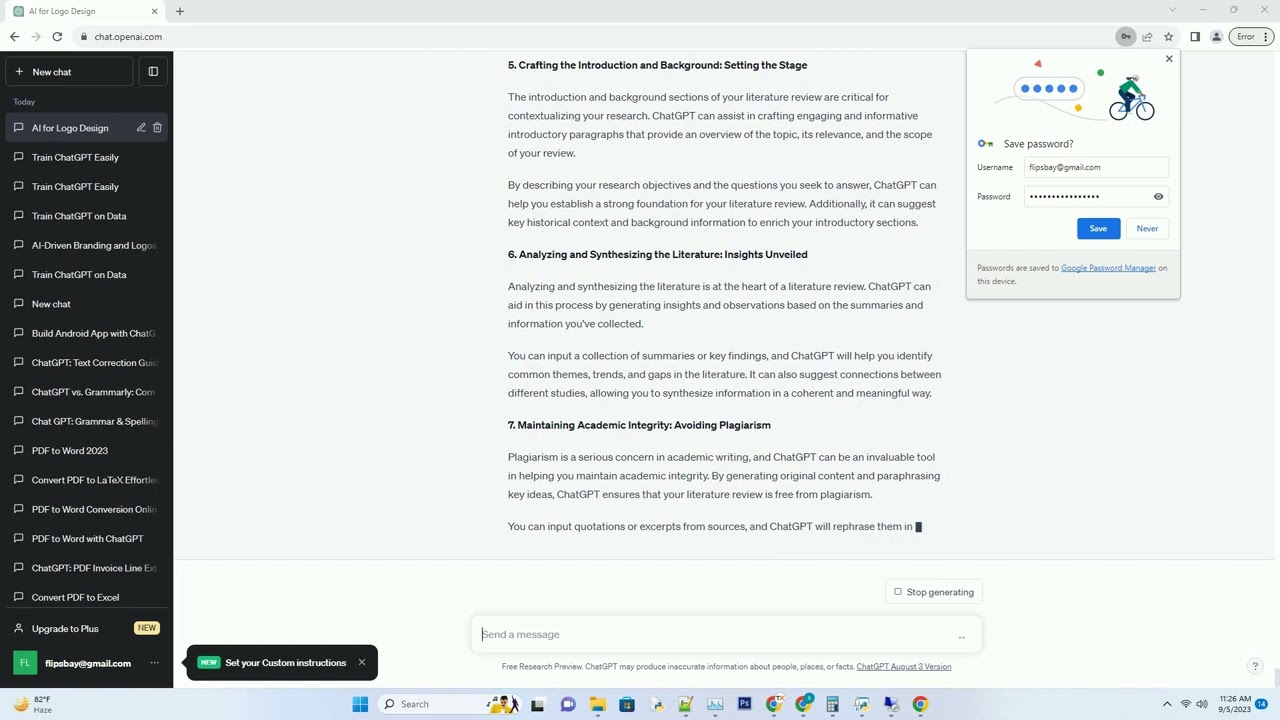
Writing a literature review is a crucial aspect of academic research and scholarly writing. It requires a deep understanding of existing literature on a specific topic, careful analysis, and the ability to synthesize information effectively. ChatGPT can be a powerful ally in this process, assisting you in crafting a literature review that is both comprehensive and free from plagiarism.
In this blog post, we’ll explore nine creative ways to use chatGPT to write a literature review that stands out while maintaining academic integrity.
-
Expand Your Research Horizons One of the initial steps in writing a literature review is conducting a thorough search for relevant sources. ChatGPT can assist you in broadening your search parameters, helping you discover valuable articles, books, and research papers that you might have missed otherwise.
-
Generating Citations and References Proper citation is a non-negotiable aspect of academic writing, and chatGPT can help you ensure that your citations and references are accurate and consistent. It can generate citation entries in the appropriate style (e.g., APA, MLA, Chicago) and assist in cross-referencing citations to ensure that every reference in your literature review matches the corresponding citation within your text.
-
Constructing the Literature Review Structure Organizing your literature review is crucial for clarity and coherence. ChatGPT can aid in constructing the structure of your review by generating an outline or a framework that identifies the main themes, subtopics, and their logical progression.
-
Crafting the Introduction and Background The introduction and background sections of your literature review are critical for contextualizing your research. ChatGPT can assist in crafting engaging and informative introductory paragraphs that provide an overview of the topic, its relevance, and the scope of your review.
-
Analyzing and Synthesizing the Literature Analyzing and synthesizing the literature is at the heart of a literature review. ChatGPT can aid in this process by generating insights and observations based on the summaries and information you’ve collected. It can help you identify common themes, trends, and gaps in the literature, allowing you to synthesize information in a coherent and meaningful way.
-
Maintaining Academic Integrity: Avoiding Plagiarism Plagiarism is a serious concern in academic writing, and chatGPT can be an invaluable tool in helping you maintain academic integrity. By generating original content and paraphrasing key ideas, chatGPT ensures that your literature review is free from plagiarism. It can rephrase quotations or excerpts from sources in a unique and original manner while retaining the core meaning.
In conclusion, with chatGPT as your ally, you’ll be able to create a literature review that stands out in the academic world, contributing to the advancement of knowledge in your field while maintaining the highest standards of integrity and originality.


